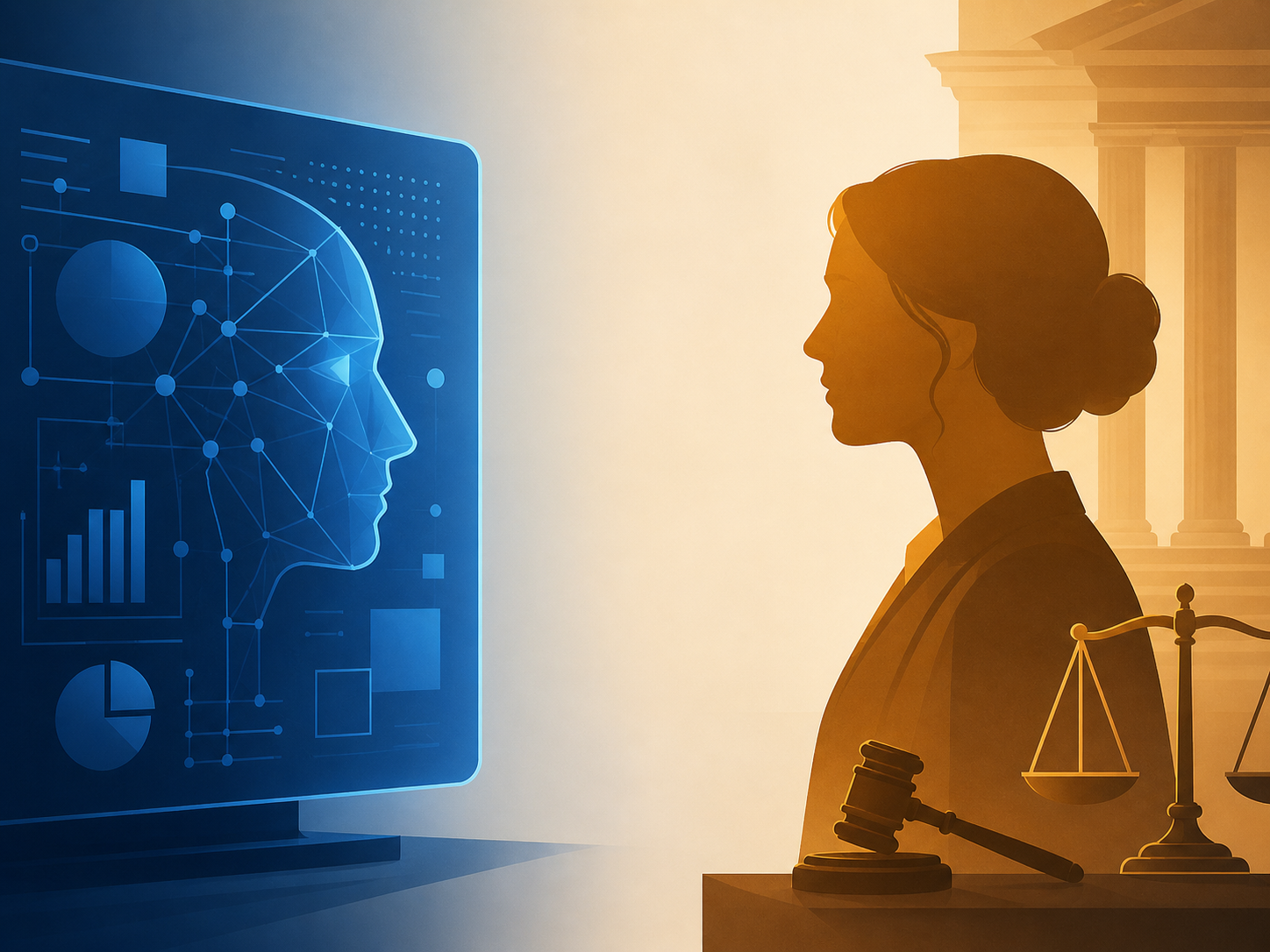
If you’ve been injured at work and you’re using AI to research your rights, I want to say something that you probably wouldn’t expect to hear from an attorney. That’s not necessarily a bad idea. ChatGPT and similar tools can help you understand basic concepts, learn the vocabulary, decipher all the crazy acronyms, and help prepare you for meeting with your attorney.
But there’s something important you need to understand, because I’m seeing it cause real problems for injured workers.
There are two versions of workers’ comp law.
The first is the written law. The Labor Code. WCAB decisions. Regulations. AI knows this version well.
The second is how workers’ compensation actually works in practice. And this version doesn’t exist in any text, because it lives in the experience of people who have spent years inside the system. And in case you have not figured this out yet, workers’ comp, especially in California, is very much a system, designed to process the claims of injured workers like yourself, and to do so in a manner that is as cost-effective as possible for the insurance company.
I’ve practiced in this system for over 17 years, as both a defense attorney and an Applicant’s attorney. In that time I’ve learned things no AI could know. Things like which doctors produce the most favorable outcomes, which Judge has a reputation for being tougher, what realistic settlement looks like, and when to push and when patience best serves a client.
None of that is in the Labor Code. It exists because I’ve been in the room hundreds of times.
Where AI gets it wrong
One of the most common problems I see is valuation. Clients arrive having already decided what their case is worth based on something an AI helped them calculate. But valuing a workers’ comp case is more art than science. It requires both an accurate estimate of the potential cost of the claim, and the knowledge of what the insurance company thinks it may cost. These are often two entirely separate things.
Another problem is more subtle. AI is very good at making general legal information sound specific to your situation. It will cite real statutes and build what looks like a sophisticated strategy around your case. But it doesn’t actually know your case. All it is doing is guessing at what it thinks the next word should be. It is an easy-to-understand expert without any real expertise, and its advice can, and often is, misleading.
How to use AI well
Use it to learn vocabulary and generate questions for your attorney consultation. Use it to understand the general framework of how the system works.
Don’t use it to value your case. Don’t use it to decide whether you have a bad faith claim. And most importantly, don’t let it become a second opinion that overrides what your attorney is telling you. Your attorney knows things about your specific case and local practice that no AI can access.
The bottom line
After seventeen years of practice in California’s workers’ compensation system, the cases that go well are almost never the ones where the law was mechanically applied. They’re the ones where an experienced advocate understood not just the rules but the reality.
AI can tell you what the rules say. It takes a human being who has spent years in this system to know what those rules actually mean for your case.
If you have questions, I’m happy to talk. Contact me for a free consultation.