When the Insurance Company Plays Doctor: The Reality of Medical Treatment Denials
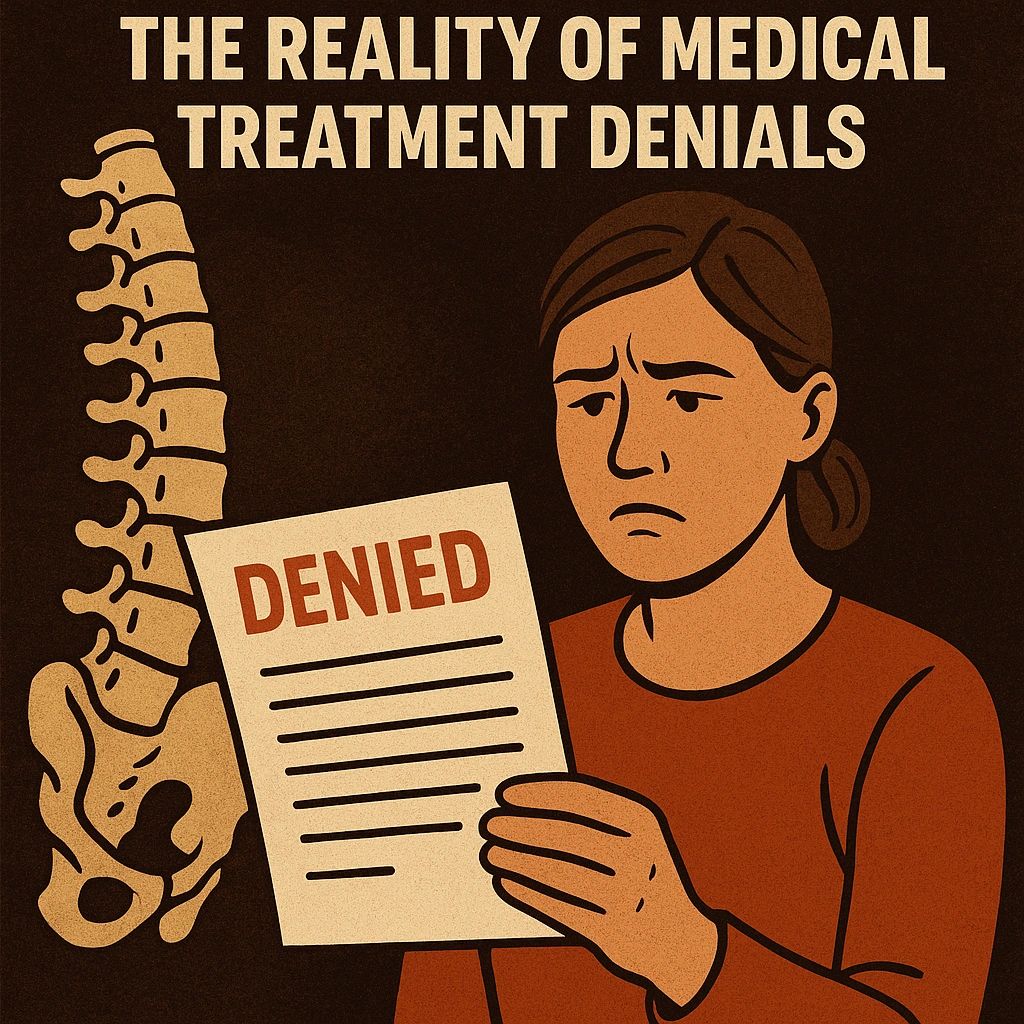
The letter arrived on a Tuesday. My client, Karen, had been waiting about two weeks for approval for a lumbar spine surgery that her treating physician said was “medically necessary” to treat her failed fusion. The insurance company’s response was a standard denial. The Utilization Review doctor did not agree with the doctor who has been treating Karen for the last two years.
Not medically necessary? Karen could barely walk without pain shooting down her leg, but apparently the UR doctor, a doctor who has never examined her, never spoken with her, and likely spent all of 30 seconds reviewing her file, got to make the final say on what medical treatment she was going to have, or more accurately, not have.
This is the sad world of California workers’ compensation, where the insurance carrier gets the final word on what medical care you receive to treat those injuries.
The System is Rigged From the Start
Let’s start with the basics. The California Workers’ Compensation system is failing to meet its fundamental promise. Per Labor Code section 4600, all medical treatment that is “reasonably required to cure and relieve the injured worker from the effects of the worker’s injury shall be provided by the employer.” But that promise is not being met. The insurance companies have rigged the system from the outset. The control the doctors you get to see with their medical provider network, and they control the treatment those doctors provide through the Utilization Review process.
During my years as a defense attorney, I saw this system from the inside. I watched as insurance companies hired UR physicians somehow always seemed to find that injured workers needed less treatment than their actual doctors recommended. These doctors are issuing hundreds of denials per day.
The dirty secret? These companies get paid by insurance carriers to say no. The more treatments they deny, the more money they save their clients. It’s a system designed to prioritize profits over people’s health.
Fighting Back: Understanding the Rigged Process
But here’s what insurance companies don’t want you to know: while the system is stacked against you, you can still fight these denials. The problem is that most people don’t understand how rigged the process really is, so they give up before they even start.
When your Primary Treating Physician (PTP) submits a Request for Authorization (RFA) for treatment, it goes to a Utilization Review company. These aren’t neutral medical experts. They’re hired guns paid by the insurance carrier to find reasons to deny treatment. They have financial incentives to say no, and they rarely say yes to anything expensive. This is most likely why Karen had her surgery denied.
When UR inevitably denies your treatment, you have 30 days to appeal to Independent Medical Review (IMR). Sounds fair, right? It’s not. IMR is handled by a company called Maximus, which operates under contract with the state. While they’re supposed to be “independent,” they’re part of the same system that profits from denying care. According to a report produced by the Division of Workers’ Compensation, IMR upheld the denial of treatment 87% of the time for all requests made in 2024.
This is not about medicine. This is about saving money. The less money the insurance company spends on your claim, the greater their profit margins from the premiums paid by employers. Each MRI denied, is money saved. Each modification of physical therapy from 12 sessions to 6, is money saved. Every delay is another day they don’t have to pay.
What You Can Do Right Now
If you’re dealing with a treatment denial, here’s an action plan. But first, understand that it is an uphill battle.
First, we need all your medical records. You can request this directly from the adjuster. You need to see exactly what the UR doctor reviewed and what they said. Often, they’re making decisions based on incomplete or outdated information.
Second, work with your treating doctor to strengthen the medical record. The UR denial will usually cite specific medical guidelines or criteria. Your doctor needs to address these directly and explain why the treatment meets the legal standard of being “reasonably required to cure and relieve.”
Third, file for IMR within that 30-day deadline. Don’t wait. While the odds aren’t great, it is your only shot at overturning the denial. Once the deadline passes, you cannot make an IMR appeal.
Fourth, make sure that the original UR denial complies with all statutory requirements. There are very strict requirements for UR. If the insurance company fails to meet those deadlines, the WCAB can take jurisdiction over the medical treatment dispute.
Fifth, get an attorney involved early. I know this might sound a bit self-serving coming from a lawyer, but having an attorney really can go a long way in helping you navigate the bureaucracy of workers’ compensation. It can also force the insurance company to play a bit more fairly.
The Bigger Picture
These treatment denials are an unfortunate part of the system, but they aren’t the end of a case. Karen’s story did have a positive outcome. After receiving the denial, her doctor sent her for a second opinion with a spinal surgeon. The visit with that doctor went really well, and he is actively pursuing additional and alternative treatments for her. After months of waiting, there is light at the end of the tunnel for Karen. All of that happened because we didn’t give in to a UR denial. We worked with her doctor and got her the care she needs.
The California workers’ compensation system promises to provide all treatment “reasonably required to cure and relieve” your injuries. Too often it fails to live up to the promise, but that doesn’t mean we don’t try. Every client and every injury is worthy of the effort.
What’s your experience with treatment denials? Have you had to fight for medical care after a work injury? Share your story in the comments – I read every one and often use real situations to guide future posts.